Follow-ups sind wichtiger als die erste Nachricht
Die meisten Deals werden nicht bei der ersten Nachricht abgeschlossen. Menschen sehen deine Nachricht, werden abgelenkt, und dann verschwindest du unter einem Berg aus Chats und E-Mails.
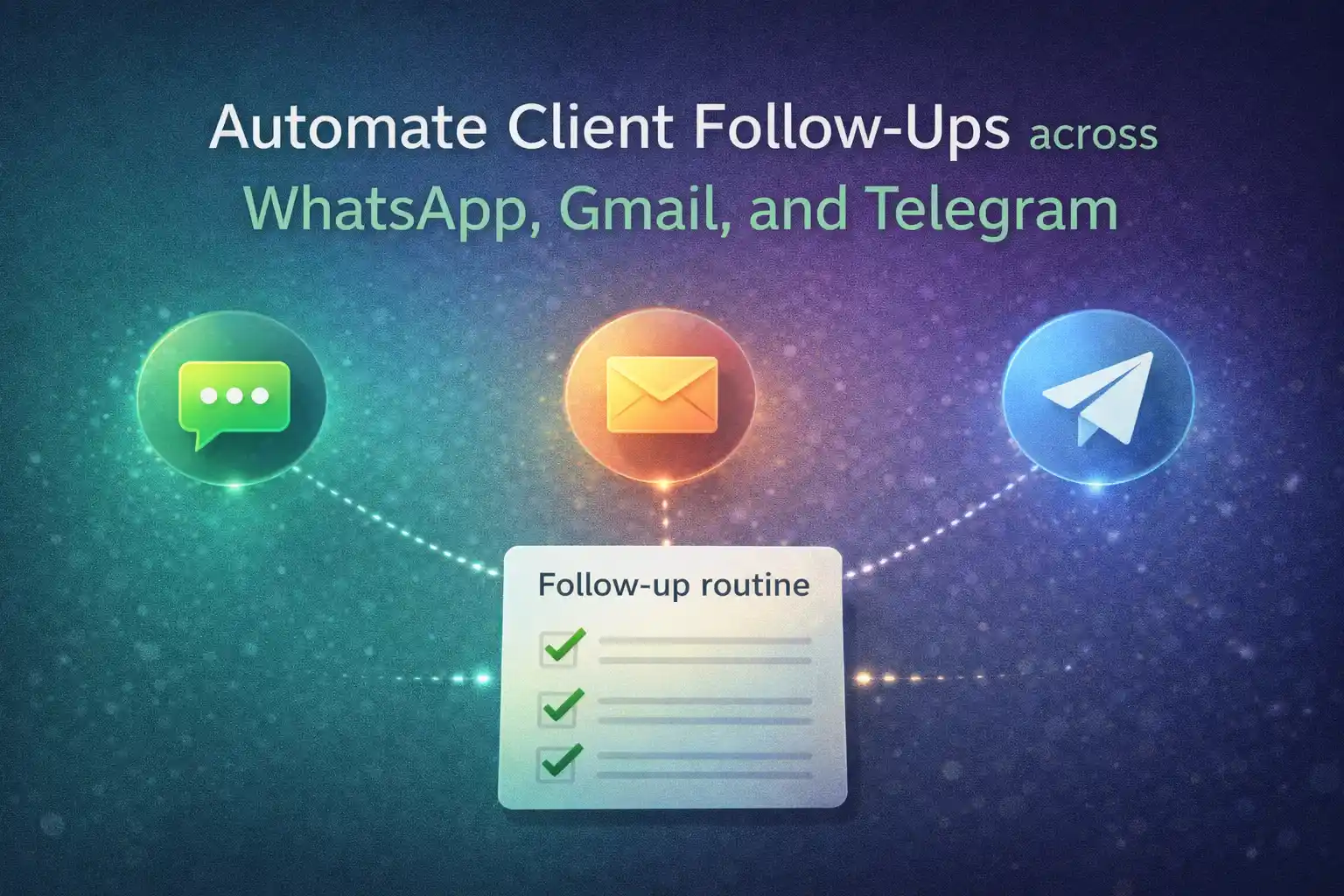
Ein einfaches Follow-up zur richtigen Zeit kann Antworten verdoppeln, aber es manuell über WhatsApp, Gmail und Telegram zu machen, ist anstrengend. Genau da hilft ein kleines, gut designtes Follow-up-System.
Wie ein einfaches Follow-up-System aussieht (kein CRM nötig)
Du brauchst kein riesiges CRM, um konsistent zu sein. Ein Basis-Follow-up-System hat drei Teile:
- Eine Liste von Personen, bei denen du dich melden willst.
- Eine kurze Sequenz an Nachrichten (Touch 1, Touch 2, Touch 3).
- Einen Zeitplan, der diese Follow-ups zur richtigen Zeit sendet.
Du kannst das über WhatsApp, Gmail und Telegram laufen lassen. Der Schlüssel ist: simpel und respektvoll, nicht spamig.
Wann du WhatsApp, Gmail und Telegram nutzen solltest
Alle drei Channels sind nützlich, aber sie glänzen in unterschiedlichen Situationen:
| Bester Channel je Kontext | Am besten für | Warum es passt | Beispiel-Follow-up |
|---|---|---|---|
|
WhatsApp
Schnell, persönlich
|
Warme Leads, bestehende Kunden
Fühlt sich wie ein persönlicher Stupser an
|
Leute, die schon mit dir im Chat sprechen
|
„Hey @recipient_first_name, kurzes Follow-up zu deiner Bestellung. Gibt’s Fragen?“
|
|
Gmail
Länger, formeller
|
Angebote, Vorschläge, Dokumente
Wirkt professionell
|
Wenn du Formatierung oder Anhänge brauchst
|
„Ich schiebe das nur nochmal nach oben in deinem Posteingang. Gerne kläre ich alles.“
|
|
Telegram
Techy, Community-Feel
|
Communities, Channels, Tech-User
Häufig bei Krypto, Dev und Nischen-Gruppen
|
Updates und schnelle DMs, wenn Telegram die Standard-App ist
|
„Kurzer Check-in zum Update von vorher. Irgendwelches Feedback?“
|
3 einfache Follow-up-Sequenzen, die du wiederverwenden kannst
Hier sind drei Sequenzen, die du über Channels hinweg laufen lassen kannst. Sie sind bewusst kurz, damit sie normal wirken, nicht pushy. Nutze sie als Startpunkt und passe den Ton an.
1) Neuer Lead (3 Touches)
- Touch 1 (gleicher Tag) – WhatsApp oder E-Mail: „Hi @recipient_first_name, hier sind die Infos, über die wir gesprochen haben. Wenn du willst, kann ich dir auch die beste Option empfehlen.“
- Touch 2 (2–3 Tage später) – gleicher Channel: „Kurzes Follow-up @recipient_first_name. Willst du diese Woche loslegen oder soll ich später nochmal nachfragen?“
- Touch 3 (1 Woche später) – gleicher Channel: „Letztes Follow-up von mir @recipient_first_name. Wenn es gerade nicht passt, völlig ok. Soll ich das schließen?“
2) Bestehende Kunden (Check-in nach Lieferung)
- Touch 1 (1–2 Tage nach Lieferung) – WhatsApp: „Hi @recipient_first_name, kurzer Check-in. Läuft bisher alles gut?“
- Touch 2 (1 Woche später) – WhatsApp oder E-Mail: „Wenn irgendwas verwirrend oder nicht ideal ist, sag’s mir, ich fix das für dich.“
3) Verpasste Termine oder Calls
- Touch 1 (gleicher Tag) – WhatsApp: „Hi @recipient_first_name, wir haben dich heute verpasst. Willst du für einen anderen @day_of_week um @time_12h neu planen?“
- Touch 2 (2–3 Tage später) – WhatsApp oder SMS: „Kein Problem. Soll ich dir diese Woche oder nächste Woche einen Slot freihalten?“
TikTask Smart-Variablen nutzen, damit Nachrichten menschlich bleiben
TikTask lässt dich Smart-Variablen in Vorlagen einsetzen, damit Follow-ups sich anfühlen, als wären sie für eine echte Person geschrieben, nicht kopiert.
- @recipient_first_name – persönliche Begrüßung.
- @my_first_name – macht klar, wer schreibt.
- @day_of_week und @time_12h – hilft, den Zeitpunkt konkret zu sehen.
- @my_contact_details – falls du „So erreichst du mich“ hinzufügen willst.
So baust du diesen Workflow in TikTask (Schritt für Schritt)
So richtest du das mit TikTask ein, damit es von allein läuft, während du die Kontrolle behältst.
Respektvoll bleiben: Opt-in, Timing und Ausstieg
Automatisierung ist stark, kann aber auch nerven, wenn du vergisst, dass auf der anderen Seite ein Mensch sitzt.
Klein starten, dann das System wachsen lassen
Du brauchst kein großes CRM, um konsistent zu sein. Ein kleines Follow-up-System über WhatsApp, Gmail und Telegram bringt dich schon vor die meisten, die sich auf Erinnerung verlassen.
Starte mit einer Sequenz und einer Liste. Wenn es läuft, kannst du mehr Channels, mehr Listen und mehr Routinen ergänzen. TikTask sorgt dafür, dass die Routine läuft, während du dich auf die echten Gespräche konzentrierst.