TikTask logo TikTask
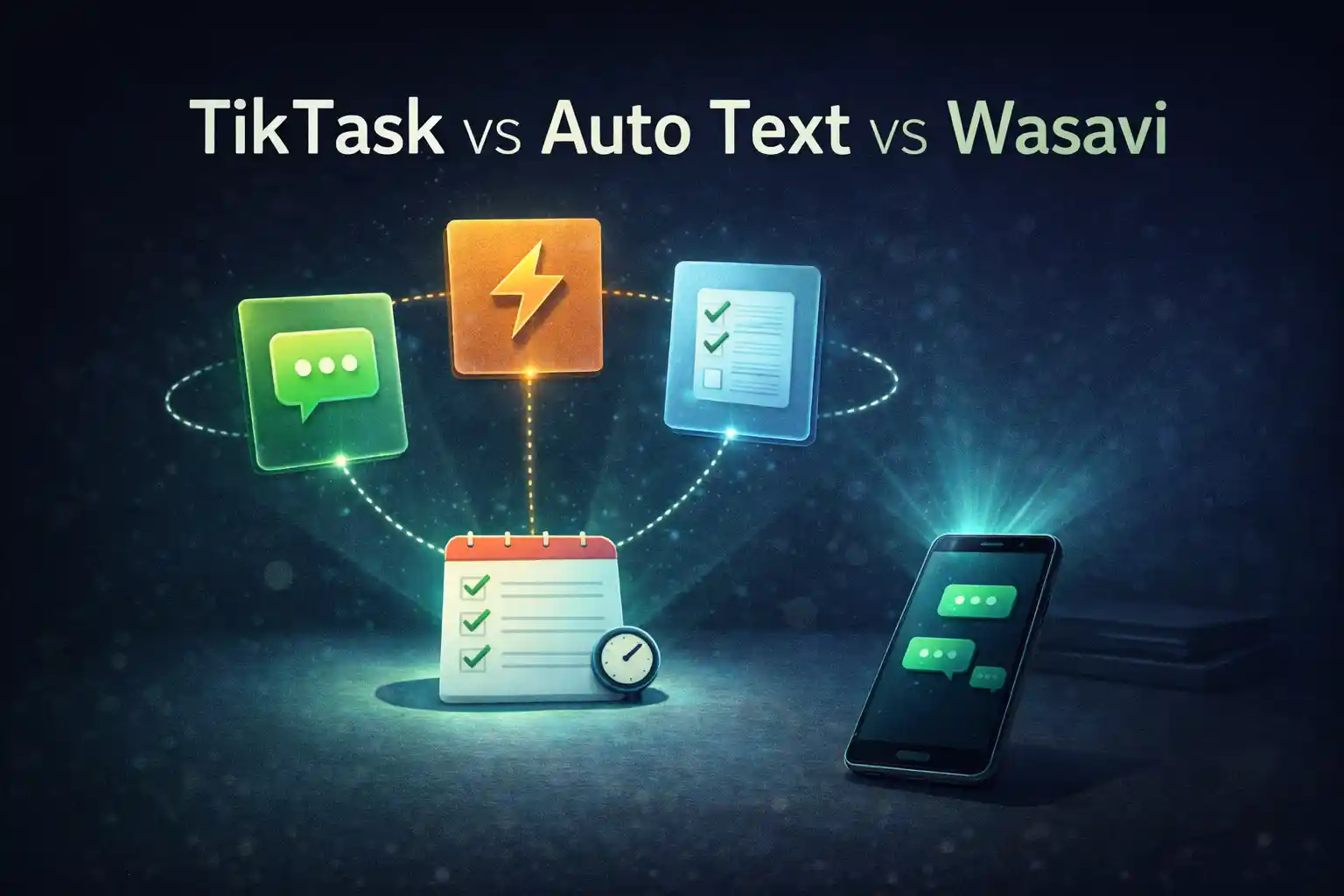
TikTask vs Auto Text vs Wasavi: choosing the right scheduler for Android (2026)
Comparisons • 9 分で読める • 更新日 2026-01-09

TikTask vs Auto Text vs Wasavi: choosing the right scheduler for Android (2026)

Auto Text is great for simple automation, Wasavi is WhatsApp-first, and TikTask is built for reliable multi-channel routines. Here is the clean comparison, plus a quick table to pick the right fit.

Android scheduling Comparisons WhatsApp scheduling Reliability Privacy-first

Three popular schedulers, three different approaches

If you are searching for an Android scheduler, you usually end up comparing three styles of apps: Auto Text for simple automation, Wasavi for WhatsApp-first scheduling, and TikTask for multi-channel routines with better reuse.

This guide keeps it practical. We will compare what they are best at, where they feel limited, and which one fits your workflow in 2026.

ℹ️
A quick honesty check
Pricing and free tiers can change across versions and regions. Use this comparison to choose the best workflow fit first, then confirm the current pricing inside each app.

The quick verdict

  • Pick TikTask if you want what the others do, plus multi-channel tasks, reusable recipient lists, personalization, and flexible schedules.
  • Pick Auto Text if you only need lightweight, simple automation and you do not need advanced workflows.
  • Pick Wasavi if you want a WhatsApp-first scheduler feel and your workflow stays basic.
💡
Big note
TikTask includes WhatsApp and Telegram scheduling on the free plan. Many schedulers typically reserve those channels or advanced features for paid tiers.

Comparison at a glance

Feature / aspect TikTask Auto Text Wasavi
Best for
Workflows
Multi-channel routines, reusable building blocks
Simple
Lightweight automation and basic scheduling
WhatsApp-first
WhatsApp-style scheduling focus
Multi-channel tasks
Yes
WhatsApp, Telegram, and more
Limited
Often single-channel style
Limited
Mostly WhatsApp-focused
Flexible schedules
Strong
One-time, recurring, and workflow-friendly rules
Basic
Works for simple needs
Medium
Good for WhatsApp scheduling patterns
Personalization
Advanced
Variables and text buckets
Limited
Depends on your flow
Limited
Usually basic templates
Recipient reuse
Yes
Recipient lists, create once and reuse everywhere
Per task
Often repeated selection
Per task
Often repeated selection
Reliability support
Built-in
Setup guides and System Monitor checks
Depends
Heavily depends on device settings
Depends
Heavily depends on device settings
Privacy model
Privacy-first
On-device by default, optional Drive backup
Varies
Depends on the app and setup
Varies
Depends on the app and setup
WhatsApp + Telegram on free plan
Included
Free WhatsApp and Telegram scheduling in TikTask
Often paid
Many features are locked behind premium tiers
Often paid
Many features are locked behind premium tiers

Why TikTask is the “do it once, reuse forever” option

TikTask is built around simple building blocks you can reuse across your day, not just one scheduled message at a time.

1) Multi-channel tasks, without complexity

If you handle conversations across WhatsApp and Telegram, a single-channel scheduler quickly feels limiting. TikTask is designed to let you automate routines across multiple channels from one place.

2) Recipient lists you reuse everywhere

Create a recipient list once, then reuse it across many tasks. This is a huge time saver for follow-ups, reminders, promotions, and routines.

3) Personalization using variables and buckets

Instead of rewriting messages, you can save templates (buckets) and personalize with variables. This helps messages feel human while you stay consistent.

💡
Fastest way to feel the difference
Create one recipient list and one bucket template first. Then schedule the same message twice, for two different times. That is where reuse starts paying off immediately.

Reliability matters more than features

On Android, “didn’t run” is almost always a device settings problem. Battery restrictions, disabled Accessibility, blocked notifications, and overlays can break scheduling even if the app is fine.

TikTask leans into this with setup guides and a System Monitor that checks the important settings, so you fix it once instead of guessing every week.

✅ Accessibility enabled
✅ Battery optimization disabled for TikTask
✅ Auto-start allowed (on OEM phones)
✅ Notifications enabled
✅ Draw over other apps enabled (when needed)
ℹ️
If you are on Xiaomi, Infinix, or Tecno
Those phones are known for aggressive background limits. Do the reliability checklist once, then you usually stop seeing random delays.

So, which one should you pick?

Pick TikTask if

  • You want WhatsApp and Telegram scheduling on the free plan
  • You want to reuse recipient lists across many tasks
  • You care about personalization (variables and buckets)
  • You want flexible schedules and multi-channel workflows
  • You want a reliability-first setup with a System Monitor

Pick Auto Text if

  • You want basic automation and do not need advanced workflows
  • You prefer minimal setup and you keep things simple

Pick Wasavi if

  • Your world is mostly WhatsApp scheduling
  • You do not need recipient list reuse and workflow building blocks
💡
Recommendation
If you are unsure, start with TikTask. You can keep it simple, and grow into advanced workflows only when you need them.

FAQ

Is TikTask hard to use because it has more features?
No. TikTask is designed to stay simple for basic scheduling, and only becomes advanced when you choose to use advanced workflows.
Why do scheduling apps fail on some Android phones?
Most failures come from battery restrictions and background limits. TikTask includes setup guides and a System Monitor to help you fix the common causes.
Does TikTask store my messages on a server?
TikTask is on-device by default. Your tasks and content stay on your phone, and backups are optional.
Can I reuse recipients across multiple tasks?
Yes. Recipient lists are designed for reuse across tasks, so you do not repeat selection every time.